
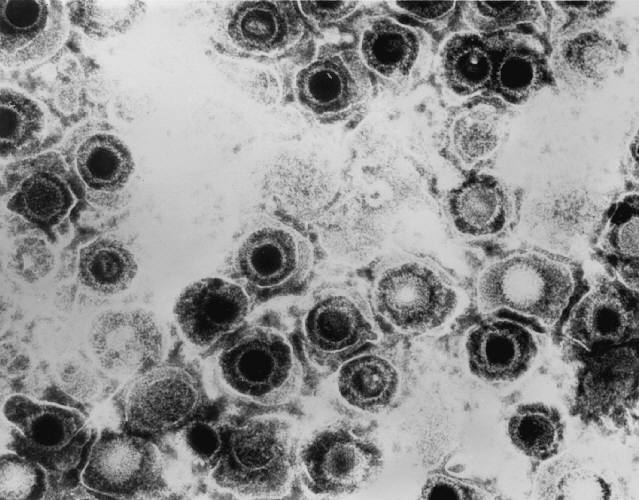
Herpes simplex virus (HSV-1 and HSV-2)
HSV-1; HSV-2
General medical information for education only, not medical advice. Treatment considerations summarize published guidance at drug-class level; therapy is chosen by the treating clinician using susceptibility results, local resistance patterns and current guidelines.
Overview
DNA viruses that establish lifelong latent infection and reactivate. HSV-1 classically causes oral lesions and HSV-2 genital lesions, though either can infect either site.
Infections
Oral and genital herpes, herpetic keratitis and conjunctivitis, herpetic whitlow, skin infection, encephalitis, neonatal herpes.
Signs and symptoms
Painful grouped vesicles that ulcerate and crust; eye pain, redness and discomfort in bright light in keratitis.
Antibiotic and antimicrobial resistance
Acyclovir resistance is uncommon and seen mainly in immunocompromised patients.
Treatment considerations
Acyclovir, valacyclovir or famciclovir; eye involvement needs urgent ophthalmology care.
Infection control and public health
Contact precautions for extensive lesions; neonatal and encephalitis cases are emergencies.


Sources
- CDC. Genital herpes (STI Treatment Guidelines).
- CDC. Sexually Transmitted Infections Treatment Guidelines, 2021.
Sources accessed November 2026. Links open external sites that InnovexLab does not control.
Medical disclaimer
This page is general educational information summarized from published public-health and professional-society guidance. It is not medical advice, a diagnosis or a treatment recommendation, and reading it does not create a clinician–patient relationship with InnovexLab. Decisions about testing, diagnosis and treatment belong to the treating clinician, using the patient’s history and examination, laboratory and susceptibility results, local resistance patterns and current guidelines. Guidance changes over time; consult the original sources for the latest version. InnovexLab provides this information as is and does not warrant that it is complete or current.
Patients with questions about their health should contact their own healthcare provider. In an emergency, call 911.