
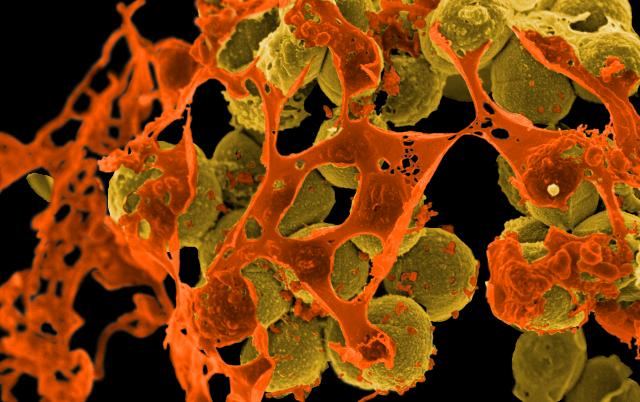
Staphylococcus aureus
including methicillin-resistant S. aureus (MRSA)
General medical information for education only, not medical advice. Treatment considerations summarize published guidance at drug-class level; therapy is chosen by the treating clinician using susceptibility results, local resistance patterns and current guidelines.
Overview
A Gram-positive coccus in clusters carried on the skin and in the nose of many people, and a major cause of skin, soft-tissue and invasive infection.
Infections
Boils, abscesses, cellulitis and wound infection; pneumonia; bloodstream infection and endocarditis; bone and joint infection; device infection. Uncommon as a primary urinary pathogen.
Signs and symptoms
Red, warm, painful skin with pus; fever; in urine, may indicate bloodstream infection.
Antibiotic and antimicrobial resistance
mecA (mecA) confers methicillin resistance (MRSA). Some strains carry the PVL toxin (PVL).
Treatment considerations
Drainage of abscesses; MSSA: anti-staphylococcal beta-lactams (for example cefazolin). MRSA: vancomycin, daptomycin, linezolid, or oral agents such as doxycycline or trimethoprim-sulfamethoxazole for selected skin infection. S. aureus bacteremia warrants specialist management.
Infection control and public health
MRSA: contact precautions per facility policy; hand hygiene.


Sources
- CDC. Staphylococcus aureus.
- CDC. MRSA.
- IDSA. Skin and Soft Tissue Infections guideline.
Sources accessed November 2026. Links open external sites that InnovexLab does not control.
Medical disclaimer
This page is general educational information summarized from published public-health and professional-society guidance. It is not medical advice, a diagnosis or a treatment recommendation, and reading it does not create a clinician–patient relationship with InnovexLab. Decisions about testing, diagnosis and treatment belong to the treating clinician, using the patient’s history and examination, laboratory and susceptibility results, local resistance patterns and current guidelines. Guidance changes over time; consult the original sources for the latest version. InnovexLab provides this information as is and does not warrant that it is complete or current.
Patients with questions about their health should contact their own healthcare provider. In an emergency, call 911.